Saturday, April 10, 2010

SCHOLA CANTORUM San Francsico Concert in Santa Cruz, California


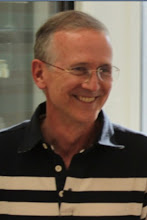
Photo: Christian Cebrian

Type:
Date:
Saturday, April 10, 2010
Time:
7:30pm - 10:00pm
Location:
Holy Cross Church
Street:
126 High Street
City/Town:
Santa Cruz, CA

Description

Santa Cruz Baroque Festival (www.scbaroque.com) presents:

Schola Cantorum of San Francisco (Paul Flight, director), Brian Staufenbiel (tenor) and the Santa Cruz Brass Quartet


Witness the birth of the Baroque in the City of Light. Our evening offers opulent choral and brass selections from composers associated with San Marco in the age of Monteverdi and informal melodies popularized by the ever-present gondoliers.

Monday, February 1, 2010

A New Month ~ A FRESH START


As Shirley MacLaine, playing the character based on Debbie Reynolds in Carrie Fisher's film Postcards from the Edge, sang from Stephen Sondheim's musical Follies: "I'm still here." Let's leave it at that. Though I must extend my gratitude to my therapist MN for his insight, guidance, and tremendous support! Thanks also to David, Adam, Szilard, Josh, Max, Jeffrey, Mary Ellen and Deb!

Wednesday, January 27, 2010

Wolfgang Amadeus Mozart January 27, 1756 ~ December 5, 1791


Image:netviolin.com


Wolfgang Amadeus Mozart -- full baptismal name Johannes Chrysostomus Wolfgangus Theophilus Mozart (27 January 1756 – 5 December 1791), was a prolific and influential composer of the Classical era. He composed over 600 works, many acknowledged as pinnacles of symphonic, concertante, chamber, piano, operatic, and choral music. He is among the most enduringly popular of classical composers.

Mozart showed prodigious ability from his earliest childhood in
Salzburg. Already competent on keyboard and violin, he composed from the age of five and performed before European royalty; at 17 he was engaged as a court musician in Salzburg, but grew restless and traveled in search of a better position, always composing abundantly. While visiting Vienna in 1781, he was dismissed from his Salzburg position. He chose to stay in the capital, where he achieved fame but little financial security. During his final years in Vienna, he composed many of his best-known symphonies, concertos, and operas, and the Requiem. The circumstances of his early death have been much mythologized. He was survived by his wife Constanze and two sons.

Mozart learned voraciously from others, and developed a brilliance and maturity of style that encompassed the light and graceful along with the dark and passionate—the whole informed by a vision of humanity "redeemed through art, forgiven, and reconciled with nature and the absolute."
His influence on subsequent Western art music is profound. Beethoven wrote his own early compositions in the shadow of Mozart, of whom Joseph Haydn wrote that "posterity will not see such a talent again in 100 years."

Wolfgang Amadeus Mozart was born to
Leopold and Anna Maria Pertl Mozart at 9 Getreidegasse in Salzburg, capital of the sovereign Archbishopric of Salzburg, in what is now Austria. Then it was part of the Holy Roman Empire. His only sibling to survive past birth was Maria Anna (1751–1829), called "Nannerl". Wolfgang was baptized the day after his birth at St. Rupert's Cathedral. The baptismal record gives his name in Latinized form as Joannes Chrysostomus Wolfgangus Theophilus Mozart. He generally called himself "Wolfgang Amadè Mozart" as an adult, but there were many variants.

His father Leopold (1719–1787) was deputy
Kapellmeister to the court orchestra of the Archbishop of Salzburg, and a minor composer. He was also an experienced teacher. In the year of Mozart's birth, his father published a violin textbook, Versuch einer gründlichen Violinschule, which achieved some success.

When Nannerl was seven she began keyboard lessons with her father, and her three-year-old brother would look on, evidently fascinated. Years later, after his death, she reminisced: "He often spent much time at the clavier, picking out thirds, which he was always striking, and his pleasure showed that it sounded good. [...] In the fourth year of his age his father, for a game as it were, began to teach him a few minuets and pieces at the clavier. [...] He could play it faultlessly and with the greatest delicacy, and keeping exactly in time. [...] At the age of five he was already composing little pieces, which he played to his father who wrote them down."

Text:wikipedia.com

If the word 'genius' has any legitimate meaning, then certainly Mozart is one of the preeminent examples.

Sunday, November 22, 2009

Dallas November 22, 1963


Photo:PBS.org

Forty-six years ago, in the autumn of 1963, I was in ninth grade. I had Miss Mildred Brown again as homeroom teacher for the third year in a row. She was a rather plain looking geography instructor. But I guess she liked me. For citizenship she gave me an A double plus. That's really rather embarrassing.

My brother Sherry (Sheridan) was a senior at Princeton. For his junior year thesis, he had written a paper on Laos and Vietnam. Sometime when I was in elementary school, Sherry had suggested a future career for me. I should go to Princeton, of course, major in Arabic studies and become an expert in petroleum. This was 1960 or 1961. Today, Sherry doesn't recall suggesting that to me, but it was rather prescient for the time. Needless to say, I didn't do any of that. Although, for years I did have my heart set on going to Princeton for undergraduate studies.

Senior year, Sherry escorted Madame Nhu (the Dragon Lady) and her very attractive daughter (who later died in a Paris motorcycle accident) around the Princeton campus. This was just before the coup, which toppled the Diem regime in early November.

Friday November 22 started as an ordinary day. In second year Latin class with a severe Miss Halbert –while we were translating Julius Caesar's Gaul Commentaries— Miss Halbert started fiddling with the radio. As murmurs arose, she snapped at us: "For your disorderly information…... the President has just been shot!"

The class went into an uproar. Students screamed and sobbed. But we went on to the next class, typing, I believe. Finally, an announcement came from the Principal on the intercom that we were excused to go home early.

As I walked past Italian Lake, toward the Zembo Shrine Mosque, and the Scottish Rite Temple— just before the McFarland Rose gardens— my Dad came by in his Ford, looking for me and drove me home.

Remembering the events of that weekend, I regret I didn't insist on going to visit Aunt Marg and Uncle Elmer Staats in Washington. I should have liked to have gone to the viewing in the rotunda. Instead, like everyone else, I stayed transfixed to the television screen, and watched Jack Ruby shoot Lee Harvey Oswald in real time.

Saturday, November 21, 2009

11th Annual National Survivors of Suicide Day ~ November 21, 2009


Each day in the U.S. more than 80 people take their own lives, leaving behind loved ones to struggle with the loss, grief & all of those questions that begin with “Why . . .?”

The holiday season can be particularly difficult for survivors, but there is help available. The American Foundation for Suicide Prevention will sponsor the 11th Annual National Survivors of Suicide Day on November 21.

National Survivors of Suicide Day is a day of healing for those who have lost someone to suicide. It was created by U.S. Senate resolution in 1999 through the efforts of Senator Harry Reid of Nevada, who lost his father to suicide. Every year, the American Foundation for Suicide Prevention sponsors an event to provide an opportunity for the survivor community to come together for support.

There are three ways to participate in this year’s conference.

· Attend a local conference from 1:00-2:30 pm local time

· Watch the live webcast from a home computer from 1-2:30 pm Eastern Standard Time and then join in a live online chat immediately afterwards, or

· Watch the webcast later “on demand” from a home computer.

To find a complete listing of the over 175 locations where the local conferences are being held, or to register for the live webcast, please go to www.afsp.org/survivorday.

Suicide touches everyone. Come together on this day in an effort to comfort, support, heal, and inform.

Courtesy of CBP website

Friday, November 20, 2009

"ROSE" ~ December 29, 1998 ~ November 20, 2009


Rob just returned from dinner at an Irish pub, THE LIBERTIES, with his brother Sherry (Sheridan), who's in town for a couple of days with a group from his Meridian foundation in Washington. The last time I ate there with him was the evening after my partner Dennis died three and a half years ago. Sherry had arrived the afternoon before. Today Sherry arrived at the house about forty-five minutes after my beloved Ruby Cavalier, dear ROSE died of heart failure.

Rose, whose pedigreed name was Stellar Coeur de la Mer, had had a heart murmur for several years. In fact a year and a half ago, I decided not to have Rose undergo dental cleaning because the anesthesia would have been too risky. Then last December Rose nearly died after it turned out she had swallowed a peach pit. A month's salary paid for the surgery which gave her a good additional eleven months. Since my Dad survived a good five years after his cardiac arrest when he was sixty-eight, I think that by doggie calculations, Rose had him beat.

I had concerns about Rose's condition this morning, and after an important meeting at work, returned home in late morning to spend the day with her. We took several naps. She lay ensconced on the sofa in the Red Room with her black and tan brother Rupert, and pesky Blenheim puppy Renzo for most of the afternoon. Early in the evening she left the sofa to go in the bedroom. A minute or two later I followed her and found Rose gone in the airline kennel under the drop-lid Biedermeier desk.

Rose will be cremated at Pets Rest in Colma tomorrow morning after my brother takes Rupert and me to the SPCA vet hospital to have his left eye checked out. I'm afraid Rupert has gone blind in that eye. Then Rose will join her predecessors Nell, 'Libet, Dundee, India and even Dennis in the Buddha Box (home Japanese Buddhist temple) in the Red Room.

Tomorrow night I go to a Chinese Wedding Banquet in the East Bay. Life goes on.

Tuesday, September 29, 2009

Possible Day in SIENA


The shell-shaped Piazza del Campo, the town square, which houses the Palazzo Pubblico and the Torre del Mangia, is an architectural treasure of Siena, and is famous for hosting the Palio horse race. The Palazzo Pubblico, itself a great work of architecture, houses yet another important art museum. Included within the museum is Ambrogio Lorenzetti's series of frescos on the good government and the results of good and bad government and also some of the finest frescoes of Simone Martini and Pietro Lorenzetti.

Siena's cathedral, the Duomo, begun in the twelfth century, is one of the great examples of Italian romanesque architecture. Its main façade was completed in 1380. It is unusual for a Christian cathedral in that its axis runs north-south. This is because it was originally intended to be the largest cathedral in existence, with a north-south transept and an east-west aisle, as is usual. After the completion of the transept and the building of the east wall (which still exists and may be climbed by the public via an internal staircase) the money ran out and the rest of the cathedral was abandoned.

Inside is the famous Gothic octagonal pulpit by Nicola Pisano (1266–1268) supported on lions, and the labyrinth inlaid in the flooring, traversed by penitents on their knees. Within the Sacristy are some perfectly preserved renaissance frescos by Ghirlandaio, and, beneath the Duomo, in the baptistry is the baptismal font with bas-reliefs by Donatello, Ghiberti, Jacopo della Quercia and other 15th century sculptors. The Museo dell'Opera del Duomo contains Duccio's famous Maestà (1308–1311) and various other works by Sienese masters. More Sienese paintings are to be found in the Pinacoteca.

On the Piazza Salimbeni is the Palazzo Salimbeni, a notable building and also the medieval headquarters of Monte dei Paschi di Siena, one of the oldest banks in continuous existence and a major player in the Sienese economy.

Housed in the notable Gothic Palazzo Chigi on Via di Città is the Accademia Musicale Chigiana, Siena's conservatory of music.

Image & Text:wikipedia.com

(More likely we'll spend two days in Siena starting tomorrow. As of this writing, today is an unplanned day. Perhaps we'll be in Vicenza or Verona and spend the night in Bolgogna.)


Titian in the Frari (Venezia)