Thursday, September 6, 2012

DAVID's Birthday ~ September 6th


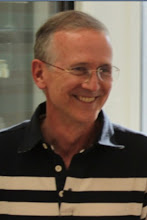
Today is my friend David Wichman's birthday. He used to have a dog-walking service. As you can see, 
he still loves his dogs!

David now lives in Palm Springs, but still travels a lot. I hope to see him later this month in San Francisco.

Best wishes always to a dear friend on his day!

Photo courtesy of Todd Davis

President McKinley Shot by Anarchist ~ September 6, 1901


William McKinley, Jr. (January 29, 1843 – September 14, 1901) was the 25th President of the United States, and the last veteran of the American Civil War to be elected.

By the 1880s, McKinley was a national Republican leader; his signature issue was high tariffs on imports as a formula for prosperity, as typified by his McKinley Tariff of 1890. As the Republican candidate in the 1896 presidential election, he upheld the gold standard, and promoted pluralism among ethnic groups. His campaign, designed by Mark Hanna, introduced new advertising-style campaign techniques that revolutionized campaign practices and beat back the crusading of his arch-rival, William Jennings Bryan. The 1896 election is often considered a realigning election that marked the beginning of the Progressive Era.

McKinley presided over a return to prosperity after the Panic of 1893. The Spanish-American War was fought during McKinley's presidency. For months he resisted the public demand for war, which was based on news of Spanish atrocities in Cuba, but he was unable to get Spain to agree to implement reforms immediately. Later he annexed the former Spanish territories of the Philippines, Puerto Rico, and Guam, and set up a protectorate over Cuba. He also presided over the annexation of the formerly independent Kingdom of Hawaii. McKinley was reelected in the 1900 presidential election after another intense campaign against Bryan, this one focused on foreign policy. After McKinley's assassination in 1901 by Leon Czolgosz, an American anarchist of Polish descent, he was succeeded by Vice President Theodore Roosevelt.

Image & Text:wikipedia.com

Friday, May 11, 2012

Athanasius Elected Patriarch Bishop ~ 328 C.E.


Athanasius of Alexandria (Greek: Ἀθανάσιος, Athanásios) (b. ca. 296-298 – d. 2 May 373), also referred to as St. Athanasius the GreatSt. Athanasius I of AlexandriaSt Athanasius the Confessor and (primarily in the Coptic Orthodox ChurchSt Athanasius the Apostolic, was the 20th bishop of Alexandria.[1] His episcopate lasted 45 years (c. 8 June 328 - 2 May 373), of which over 17 were spent in five exiles ordered by four different Roman emperors. He is considered to be a renowned Christian theologian, a Church Father, the chief defender of Trinitarianism againstArianism, and a noted Egyptian leader of the fourth century.
He is remembered for his role in the conflict with Arius and Arianism. In 325, at the age of 27, Athanasius had a leading role against the Arians in theFirst Council of Nicaea. At the time, he was a deacon and personal secretary of the 19th Bishop of Alexandria, Alexander. Nicaea was convoked byConstantine I in May–August 325 to address the Arian position that Jesus of Nazareth is of a distinct substance from the Father.[2]
In June 328, at the age of 30, three years after Nicæa and upon the repose of Bishop Alexander, he became archbishop of Alexandria. He continued to lead the conflict against the Arians for the rest of his life and was engaged in theological and political struggles against the Emperors Constantine the Great and Constantius II and powerful and influential Arian churchmen, led by Eusebius of Nicomedia and others. He was known as "Athanasius Contra Mundum". Within few years of his departure, St. Gregory of Nazianzus called him the "Pillar of the Church". His writings were well regarded by all Church fathers who followed, in both the West and the East. His writings show a rich devotion to the Word-become-man, great pastoral concern, and profound interest in monasticism.
Athanasius is counted as one of the four Great Doctors of the Church in the Roman Catholic Church[3] as well as one of the Great Doctors of the Church in Eastern Orthodoxy, where he is also labeled the "Father of Orthodoxy". He is also celebrated by many Protestants, who label him "Father of The Canon". Athanasius is venerated as a Christian saint, whose feast day is 2 May in Western Christianity, 15 May in the Coptic Orthodox Church, and 18 January in the other Eastern Orthodox Churches. He is venerated by the Roman Catholic Church, Oriental and Eastern Orthodox churches, the Lutherans, and the Anglican Communion.

Wednesday, April 20, 2011

Possible date of Mohammed's birth ~ April 20, 570 C.E.


Image:wikimedia.org/wikipedia/commons/c/ca/Siyer-i_Nebi_151b.jpg


The Prophet Mohammed (figure without face) at the Kaaba in Mecca. Ottoman miniature painting from the Siyer-i Nebi, kept at the Topkapı Sarayı Müzesi, Istanbul (Hazine 1222, folio 151b)

Monday, November 8, 2010

ERNEST BLOCH ~ July 24, 1880 ~ July 15, 1959

.


Image:schirmer.com/.../ composer/large/bloch-e.jpg


A year ago last night I sang in the chorus for a special Ernest Bloch concert at the San Francisco Conservatory of Music. I did it as a favor to a Bohemian Club friend, David Conte, a composer, professor of composition and conductor of the chorus at SFCM. Ernest Bloch was the first director of SFCM and last year 2009 was the half-century anniversary of Bloch's death in 1959.


The first half of the concert was a brilliant three-part violin/piano piece --not titled a sonata, but Baaal Shem (Three Pictures of Hassidic Life). The German Axel Strauss, an extraordinary violinist and a faculty member, was soloist, accompanied very expressively by guest artist Solon Gordon. This piece was composed in 1923, the same year he became an American citizen after immigrating from Switzerland. There definitely were hauntingly Jewish qualities to the piece. This was all the more thought provoking when played by a German.


I said above that I sang in the chorus as a favor to a friend. But the favor really was to me. Ernest Bloch's Avodath (Sacred Service), is an extremely powerful and moving concert piece originally composed to be performed in the Reformed Jewish liturgy. That it was copyrighted in 1934 (the year after Hitler assumed power in Germany) premiered in Europe that year and first heard in San Francisco in 1938 (the year of Kristallnacht) at Reform Temple Emanu-el, made it all the more poignant when we sang it two nights before the 71st anniversary of Kristallnacht (subject of a separate post tomorrow). I remember going to a special service at Temple Emanu-el commemorating the 50th anniversary of Kristallnacht. I can hardly believe that that was twenty-one years ago! I was working at Neiman-Marcus at the time and the next day I sold some jewelry to Cantor Roslyn Barak. She was shopping with her mother, and I told her how moved I was by her singing the night before. (Check out my very first blog post on September 4th, 2008.)


Back to the Sacred Service. Bloch's orchestration was distinctive, yet reminiscent at times of Mahler, early Schoenberg, Impressionism, even Wagner in places, and then Miklos Rozsa, composer of the film Ben-Hur. Of course, it was really Miklos Rozsa, who had been influenced by Ernest Bloch. The orchestra and chorus were conducted very capably by Andrew Mogrelia, former principal conductor of the San Francisco Ballet. The impressive baritone soloist Cantor was the Thai bass-baritone Kittanant Chinsamran. It was a genuine privilege for me to be a part of the chorus. Besides it was great fun to sing with conservatory students in their teens, twenties and early thirties.


Some text courtesy of SFCM concert program notes
Sunday, October 10, 2010

DINNER IN PARIS at LA BASTIDE ODEON


This is where Debbie and I had a marvelous dinner in Paris a year ago. The food and presentation were absolutely first rate.

I was so tired though, that I didn't take sufficient advantage of being in Paris. Then after finding an internet cafe following dinner, I forgot that the Left Bank is not on any grid, and instead of showing Deb the Pantheon on the way back to our small hotel, went many blocks out of our way behind the Pantheon -- and not the prettiest part of Paris. I hadn't realized that Deb had spent only a single day in Paris many years ago. We could have at least walked around Notre Dame and Isle de la Cite for the detour we took.

Since then Debbie's been back and spent a week with her niece, who is living there this year.


Friday, July 16, 2010

622 – The Beginning of the Islamic Calendar


Image:goeastyoungwomantodubai.files.wordpress.com/2009/03/isaslabecalenlrg.jpg

The Islamic calendar or Muslim calendar or Hijri calendar (Arabic: التقويم الهجري‎; at-taqwīm al-hijrī; Persian: تقویم هجری قمری ‎ taqwīm-e hejri-ye qamari; Turkish: Hicri Takvim) is a lunar calendar having 12 lunar months in a year of 354 or 355 days, used to date events in many Muslim countries (concurrently with the Gregorian calendar), and used by Muslims everywhere to determine the proper day on which to celebrate Islamic holy days and festivals. Its first year was the year during which the Hijra, the emigration of the Islamic prophet Muhammad from Mecca to Medina, occurred. Each numbered year is designated either H for Hijra or AH for the Latin anno Hegirae (in the year of the Hijra). A limited number of years before Hijra (BH) are used to date events related to Islam, such as the birth of Muhammad in 53 BH.

Text:wikipedia.com

Titian in the Frari (Venezia)