Showing posts with label Robert F. Rich. Show all posts

Sunday, December 14, 2014

ROBERT F. RICH ~ FAMILY CHRISTMAS DINNER


Image:usrarecoins.net
My Mother’s family, the Rich’s, would get together for the first two weeks in August at Zavikon, my grandfather Baba's summer house in Canada, and have a family dinner in Harrisburg, Pennsylvania on a Saturday - two or three weeks before Christmas. I guess Harrisburg was a more central location for relatives coming from Washington, Lancaster, and Woolrich --and later South Carolina and Chicago.

We generally had an afternoon dinner in a large banquet room on the second floor of the Hotel Harrisburger across the street from the State Capitol grounds. We cousins loved to run up and down the large staircase, which led to the banquet room. (Later the management tried to maximize floor space by eliminating the staircase; but they only succeeded in ruining one of the best features of the hotel and hastening to bring about its demise.)

The hotel had a fine English restaurant called the Pickwick Tavern, one of the few really good restaurants in town. The aunts and uncles would generally meet there for cocktails before dinner. Grandfather Rich never allowed any wine at his table.

We all sat at one large table— probably several put together—covered with white linen tablecloths, and Mother's colorful holiday tablecloths on top. My Dad’s friend, Helen Heisey, usually completed the decorations, incorporating Mother's several silver candlesticks, and made holly floral arrangements. After Baba's second marriage to Pattie Wideman, the table accommodated almost thirty people. There was a small poinsettia at each place setting, and a silver dollar underneath each person's salad plate or first course.

Two uncles sat at opposite ends of the table to carve the turkeys. Dad always got a kick out of using his electric carving knife.

After dinner, Baba insisted that all the cousins perform. Scottie Kurtz would play the accordion. David Staats would recite a poem. Everybody did something. Then Baba dispensed the silver dollars.

We Bell's all played music – Cynthia on the violin; Julie, the flute; Sherry, the clarinet; and I, the 'cello. Sometimes we'd play duets or trios, and I'd accompany everybody with Christmas carols on the piano. The other cousins thought the Bells were show-offs. But we sure raked in those silver dollars!

(And these were genuine silver dollars – not sandwiched copper.) Sometimes I left with more than fifteen or twenty. But I don't have them today. I gave some away as birthday presents. But most, I just spent – primarily on candy. I remember buying one hundred pieces of licorice at a corner grocery for a silver dollar.

Wednesday, September 17, 2014

A Proposed 28th Amendment to the U.S. Constitution


On this 226th anniversary of the United States Constitution, I'm re-posting my suggestion for a new amendment. I realize it won't go anywhere, but I still think it's a good idea. Many so-called "Originalists," who insist that Justices on the Supreme Court should interpret only exactly what is written in the United States Constitution and no more, fail to recognize that nothing in that sacred document gives the Supreme Court the right to rule on the constitutionality of legislation. Activist Chief Justice John Marshall-- legislating from the bench--assumed that right in the Marbury v. Madison Case; and that is all the more reason I contend that it is undemocratic for the Supreme Court to reach decisions by a simple five/four majority when overruling the two other co-equal branches of government.


PROPOSAL FOR A NEW CONSTITUTIONAL AMENDMENT

Oh, no! Not another nut attempting to tamper with the Constitution! Don’t people realize that our Republic has endured so long in part because our Founding Fathers bequeathed to us an elegantly sparse Constitution? Why clutter it up with unnecessary amendments!

At the outset, I must confess, I am not a supporter of the amendment to protect the flag. Yes, I do revere the flag of the United States of America. Some of my fondest memories from childhood were raising and lowering the flag at my maternal grandfather's summer house in the Thousand Islands on the Saint Lawrence River near Alexandria Bay, New York. We had an elaborate ceremony at the beginning and end of each day. We were extremely diligent not to let the flag touch the ground. We folded it carefully in military triangle fashion. (Curiously, I recall some regulation, which specified that burning was the only lawful way to dispose of an old, tattered flag). My grandfather had been a staunchly conservative Republican Congressman from Pennsylvania during the New Deal. I am one of his two namesakes. He and I would most likely have disagreed on most issues; but admiration for our flag is one on which we did agree. (Then there are the mythic images of Iwo Jima, Fort McHenry, and ‘Old Glory’ on the moon).

My reason for opposition to the proposed amendment is: despite the opening words of the Pledge of Allegiance, I do not consider that I actually pledge allegiance to the flag— a piece of cloth— instead, I pledge allegiance to the country, to the constitution, to the concepts which establish our liberty. And one of those concepts is freedom of expression as protected in the First Amendment. I consider the proposed flag amendment to be so much political posturing. I'm not aware of any current outbreaks of flag burning. But even more important than protecting the flag, is redefining a proper balance between the three branches of the Federal Government.

Recently, there have been a number of five-to-four decisions by the Supreme Court, which ruled several U.S. laws to be unconstitutional. On the face of it, it seems to me, that a one-vote majority, by a supposedly third co-equal branch of government over-ruling legislation passed and signed by two other co-equal branches of government, is structurally out of balance. But you say, doesn’t the President, as a majority of one, have the authority to veto legislation passed by the two houses of Congress? Yes, but Article I, Section 7 of the Constitution clearly defines a procedure for the Congress to override the President’s veto by means of a two thirds vote in both houses.

The Supreme Court, on the other hand, has no such specific procedure defined in Article III. Section 2 of Article III apparently gives jurisdiction over Laws of the United States to the Supreme Court; but it wasn’t until fourteen years after ratification— a time when many, if not most, of the original framers were still alive to be consulted about their intent— that the doctrine of judicial review was asserted in the 1803 decision by Chief Justice John Marshall in the seminal Marbury v. Madison case.

The doctrine of judicial review is clearly established, so why consider a constitutional amendment on the matter 205 years later? Let me offer an example. It wasn’t until 126 years after the assertion of a Vice-President to be called “President” instead of “Acting-President” when succeeding in mid-term, that an amendment clearly defined what had already been established in practice. That was done in Section 1 of the 25th Amendment ratified in 1967. Had William Henry Harrison died in the last year of his term rather than near the end of his first month in office, Vice-President Tyler might have been content to have been addressed as “Acting-President” (as, indeed, Vladimir Putin did in the Russian Republic). Forty-seven months was apparently too long. Besides, Tyler held the office, and so appropriated the title. The precedent was set and used six more times before the 25th Amendment legalized the title as part of the procedure for selecting a new Vice-President. So here goes my proposed amendment for clarifying judicial review.

28th Amendment to the Constitution of the United States of America

XXVIII


Section 1. The Supreme Court of the United States retains authority for judicial review of all United States Laws as passed by the two houses of Congress and signed by the President, or passed by two thirds override of a Presidential veto.

Section 2. To render a United States Law unconstitutional, the Supreme Court of the United States must decide by an affirmative vote of at least two thirds of the justices on the Supreme Court.

Section 3. This amendment does not apply retroactively to previously adjudicated cases, nor to other jurisdictions enumerated in Article III.

##############

Under the current configuration, a two-thirds vote by the Supreme Court would be six to three— or two to one— surely a more powerful and a greater moral authority for overturning legislation than a simple majority. Linda Greenhouse, in her report about the May 15, 2000, five-to-four vote overturning the Violence Against Women Act, wrote in the New York Times published May 17, 2000,that the decision in the United States v. Morrison represents the “…court’s new federalism jurisprudence….: holding Congress to its limited and enumerated powers.”

The problem is, there is no countering limited and enumerated power defined for the court, itself, in the matter of judicial review of legislation. For all the criticism of the so-called activist Warren Court, many of its most controversial decisions were passed unanimously. This proposed amendment falls short of that, but is an attempt to set aright a structural imbalance between three co-equal branches of government; so that a single Supreme Court Justice would not be able to invalidate an established law simply by majority vote.

Granted, I might regret some future five-to-four vote, which would not prevail because of this new amendment. So be it. The procedure, at least, would be appropriate; and a more proper balance, established between the three branches of the Federal Government.


Rob Bell

San Francisco

Robert F. Rich Bell
Grandson of The Hon. Robert F. Rich
Member of Congress
16th Congressional District of Pennsylvania 1931-51

Image:davefoulk.net/wp-content/uploads/2009/07/american-flag-2a.jpg

Friday, August 1, 2014

ZAVIKON


Throughout my childhood, August 1st meant Zavikon
my maternal grandfather's marvelous summer house 
in the Thousand Islands. Until he died in 1968, his family, or at least those of three of four daughters, and about thirteen grandchildren spent the first two weeks of August on the two islands in the middle of the St. Lawrence River between Alexandria Bay, New York and Rockport, Ontario. After Baba died we usually went the first two weeks of July and celebrated Canada Day and American Independence Day with our own fireworks display 
on the smaller island.

Some of the happiest moments of my childhood were spent in Canada on those two islands, a bridge and boats with cousins, aunts and uncles, and ‘patriarch of righteous magnanimity.’ The big island was named ‘Zavikon,’ the smaller one, ‘Kiwa.’ Supposedly the two names together meant “Welcome to the Happy Wigwam” in Iroquois. But I think that was ‘20’s Jazz Age jive. My grandfather, Robert F. Rich-- for whom I was named-- had been a conservative, if not reactionary, Republican congressman for two decades. He was a successful industrialist in the middle of the Great Depression. (He probably would have disowned me, had he known I was gay).


Anyway, at Zavikon we had lots of traditions and rituals. Every day started with all the grandchildren waiting outside Baba's bedroom. After his bath, he would open the door, then the cousins would hold his, and each other's hands, and process down the staircase. All would sing lustily and out of tune: "Old soldiers never die, never die.......they just fade away." (He had been suitably impressed with Douglas MacArthur's farewell to Congress). The irony was that my grandfather had never been a soldier, and it just wasn't true: old soldiers do die. But somehow it's all right.
At birth, the only certainty is that each one of us receives a death sentence. What's important is the time in between. Zavikon was a magical place. At one time I wanted my ashes smuggled up there and put in the flower gardens. (I guess I still do. And with Dennis' example, there will be plenty to go around and still officially reside in the North Tower at Grace Cathedral.)
Baba had spent his honeymoon in the Thousand Islands, and always retained a warm place in his heart for that part of the world. (Too bad his daughters had cold blood and cold feet and so passed up the opportunity to buy the place for a song in ’75.) Just after the war, in the mid 40's, Baba had purchased that wonderful pair of islands smack in the middle of the St. Lawrence River with the small bridge connecting the two.
After only one year, he realized the upkeep was exorbitant, so he sold it to his own company and continued to use it one month each year -- the first two weeks in August for the family and two weeks in September for his fishing buddies. (I still maintain that we cousins could have maintained the place ourselves. That would have meant that vacations would have been working vacations, but it would have been well worth it. But as Uncle Charlie said at the time: “Life is made up of epochs. Zavikon was but one. Life goes on to the next one.”)
Cousin Charlie and I shared a bed on the third floor dormitory all the way through elementary school. (I remember how Mother later protested: “I never thought that was a good idea!” As though that would have made any difference in my orientation.) There were four single bedrooms at the ends, and two bathrooms.
I have one of the framed engravings that used to be on the dormitory wall. I took it when the place was for sale; but only because somebody else had already pinched the companion picture. The caption for the one I have, reads: “When a man’s single, he lives at his ease.” The other said: “When a man’s married, his wife’s never pleased.” Whoever took it should have taken them both. I don’t like to break up sets. Since mine shows the man slouching in his chair, I’ve hung it on the inside door of the water closet on 23rd Street.
At Zavikon, we had two formal meals a day around that huge table in the dining room next to the living room, divided by handsome Tuscan Doric columns. Breakfast was at 9:00 and dinner at 4:00. That allowed time for eighteen holes of golf after breakfast - and with daylight savings - another eighteen after dinner.
I caddied for Baba in Canada in the summer. I’ve never really cared for the game. You can say that golf is a form of socialization, a venue for business deals, a way to enjoy the outdoors, a physical and a mental game, a form of Zen --one shot at a time-- a competition against yourself, and so forth; but ultimately it’s about hitting that ball into a hole, and to be any good at it takes more time than I’m willing to devote.
Ibby was known to play round after round. I think the most she ever played was four rounds of eighteen holes in one day – that’s 72 holes of golf! Up at Zavikon, as it grew dark and Dad waited for her in the ‘Fishing Boat’ or the ‘Woolrich,’ Mother lit matches in order to finish putting her last hole.
Unlike Mother, Dad was not a passionate golfer. He would rather drive the boats and take the nieces and nephews to Alexandria Bay. He loved to buy us ice cream, candy, hot dogs, popcorn. He, too, loved to eat. It was hard for him when he started having a sugar problem. But he figured he could just take a pill, and cheat with a hot fudge sundae.
I think Dad enjoyed driving the ‘Fishing Boat’, even more than the ‘Zavikon’, that 1955 mahogany Chris-Craft, like the one crashed in the film “On Golden Pond.” The fishing boat was a sleek, long and narrow mahogany craft indigenous to the Thousand Islands. It had a steering stick, instead of a steering wheel. Forward was right, backward, left; or I guess I really should say, starboard and port. (I’m sure you already know that ‘posh’ originally meant “port out, starboard home” for Brits going to and from Indja.)
Dad could be impulsive, nonchalant, and sometimes in a hurry at the same time.
Another word might be careless. I guess that word by itself could have several implications. I think they all applied to my Dad, Sherry. One summer when the water was higher than usual, Dad took the 'Zavikon' over some rocks on the way back to the boathouse, and lost the propeller. Uncle Charlie later dived and retrieved it. The propeller was damaged and twisted. Uncle Charlie had it brass plated, bolted a curved hammered metal piece to it, and gave it to Dad as an ashtray for Christmas. I still have it in San Francisco.
As of March 1, 2003, there is no more U.S. Customs Service; we are now the Bureau of Customs and Border Protection within the Department of Homeland Security (even, the Trade side). But back in the Zavikon days, we had to deal with Customs almost every day. For years, we did our grocery shopping in Alexandria Bay and brought them back directly to Zavikon. However, the house and boathouses were in Canada. In fact, both islands were in Canada, despite the claims about the bridge and the huge American flag on the smaller island. It’s true the international marker was on the smaller island, but maps showed the actual boundary was 20 feet or so off Kiwa.
Eventually we learned that if we bought groceries on the American side, we would have to go all the way to Canadian Customs in Rockport before returning to Zavikon. That would be as if you lived on Treasure Island in San Francisco Bay, and bought something in North Beach, and then had to go all the way to Oakland before returning to Treasure Island. From then on, we did our grocery shopping in Canada. When the Heisey’s joined us after Baba died, Helen preferred going to Gananoque anyway. It had wonderful wool and china outlet stores—good restaurants, too.
###


For several years in my adolescence, I expected August 1st to be my wedding day. My best friend as a child was our dentist's second daughter, Beth Heisey. Ken and Helen Heisey were my parents' best friends. Certainly, Helen was my Dad's. But Mother and Ken played golf together, and all four were regular bridge partners -- that is, Ken Heisey and Ibbie Bell; Sherry Bell and Helen Heisey.


It just made sense that I would marry Beth some day. And since Ken & Helen were married on July 1st, and Sherry and Ibbie on September 1st ... well, you get the picture. Of course it didn't work out. And it would have been a disaster. Still it was a schoolboy fantasy of mine for several years. As you've gathered, I have a thing for anniversaries. So I still think of August 1st as a special day for me... a little like the Coronation of Edward the Eighth.


Ever since I was a child I wanted to have my ashes eventually reside in the flower gardens at Zavikon. But now I have a paid spot reserved for me next to Dennis in the North Tower Columbarium at Grace Cathedral in San Francisco. Perhaps there will be enough to spread around.
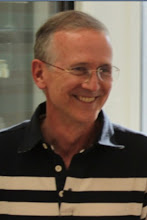


Monday, April 28, 2014

Robert F. Rich ~ June 23,1883 ~April 28,1968


My maternal grandfather, Robert F. Rich, died the end of April 1968. I found out after a Saturday singing group jamboree at Mount Holyoke, Mother’s Alma Mater. I was with the Yale Spizzwinks(?). I remember seeing David Eisenhower with Julie Nixon before they married and before her father got the nomination. David sang with a group from Amherst. I had been working on a term paper for my NROTC Naval History class about the naval arms race between Germany and England before the Great War. Because I went to Woolrich for Baba’s funeral, I was able to get an extension on the paper. I was relieved—about the paper! Strange that I should remember that. Baba had the lead obituary in the New York Times on the page opposite the editorials. Today's obits don’t have so prominent a position. Admittedly, grandfather was featured partly because they thought him a crank. He had opposed every appropriations bill, denied a pension to Mrs. Roosevelt (he felt she didn’t need it, and was probably right) and proposed reducing funding for TVA from so many millions, to two cents. At least he had a sense of humor. (I hate to think that he might have been a supporter of the Tea Party today!)

Baba was a formidable man. He must have been a tyrant of a Father. Mother was in awe of him. One way he influenced her was his absolute stand on alcohol. He had promised his dying Mother that he would never touch a drop in his life. (And until just before the end, he hadn’t. Because of his heart condition, his doctor prescribed medicinal wine, though I’m not sure he knew what it was.) Mother had convinced me, though. I remember explaining her position to classmates my freshman year at Yale. Maybe drinking wouldn’t be a problem for me. Perhaps I would be able to hold my liquor, but the very fact that I might drink could lead to the irresponsible drinking by someone else – and in the greater web of civic obligations, I would be accountable for that other person’s irresponsible behavior – or some convoluted reasoning like that. As it was, my first drink was communion at Yale. I didn’t think that counted, so I was still determined to win grandfather’s platinum and diamond pocket watch. Then I joined the Spizzwinks. The rest you know. I became fond of Bourbon. Now I like only single malt Scotch— and, of course, good wine.

But I remember the spring of my Upper-Middler year at Mercersburg, when Mother and Dad came to pick me up in Dad’s new Ford and we drove to Washington to witness Uncle Elmer sworn in as Comptroller General of the United States by President Johnson in the East Room of the White House. Afterwards there was a reception at the Staats’ house in Spring Valley and we toasted Uncle Elmer with a bottle of champagne. Mother and I were the only ones who refused. Even grandfather took a sip.


Thursday, October 31, 2013

HALLOWEEN 1960


(Can this really be more than half a century later?)

1960 was the year of the Kennedy–Nixon Election. I, of course, supported Richard Nixon. I was still too young to think for myself. I came from a strong Republican background. Bob Rich— my maternal grandfather, for whom I was named – after all, had been a Republican member of the House for almost two decades. Furthermore, "Experience Counts!" John Kennedy was nothing but a young whipper-snapper!

In typical fashion, I overplayed my enthusiasm. I wish I had a photograph of it!! For the Halloween parade at Steele Elementary School, I went as a Nixon supporter. No jest intended. I wore black pants with 'NIXON' in white adhesive tape up one leg, and 'LODGE' on the other, an 'N' on one shoe, an 'L' the other, campaign buttons on my sleeves, and a sandwich sign with Nixon-Lodge campaign posters. I carried two other double-sided mounted posters on wooden sticks and, of course, wore a Nixon boater hat with extra buttons on the band.
I was crushed when Nixon lost.

(How quickly …and soundly I changed!)

###

On April 18, 2007 I listened to NPR, and at the end of an obituary for Kitty Carlisle Hart, as she sang Smoke Gets in Your Eyes during the credits, I recalled the autumn of my sophomore year in New Haven. Yale Glee Club conductor Fenno Heath’s secretary was a strikingly elegant blond soprano named Judith (I think), a student in the Music School, and had the female lead in a local production of Roberta at a High School near East Rock. I went to see her in the show. Her principal song was Smoke Gets in Your Eyes. I remember talking with Judith occasionally— particularly the morning after the 1968 election. We were horribly depressed that Nixon had won. Judith commented, however, that maybe it would work out for the best since Nixon evidently wanted the job so badly. (Fenno’s Glee Club office in Hendrie Hall had a moody bust of Sibelius, which I thought rather curious, since Sibelius had been out of favor for several decades. Now, of course, he’s considered one of the greats of the Twentieth Century).

Anyway, on Saturday night 04/21/07 I went to a small, local Spizzwink(?) alumni get-together at Perry’s on Union Street. After a fine lunch with Adam K at the Rotunda in Neiman-Marcus and a too-short nap with Rose and Rupert, I really wasn’t up for the evening—especially with the downpour. I got a taxi with a cell-phone-chatting Asian cab driver, who didn’t seem to pay much attention to the weather conditions, or the traffic. So I was grateful when I managed to get there alive.

On leaving my flat, I had picked up my copy of the Spizzwink(?) song book from 1971. When I opened it I came across a notation on the back of a sheet of music: “Latest Harris Poll H 43 N 40” The night before the ’68 election, it had looked as though Humphrey would win! Devin, one of the newer alums and a graduate student in Poly Sci at UC Berkeley, was fascinated to hear that. He said that it showed you couldn’t depend on polling data then. Of course, 2000 demonstrated that even if Humphrey had received 43 % and Nixon 40 %, that alone would not necessarily have guaranteed election victory for either one.
(Check out my 10/02/08 posting : October Surprise 1980 (1968) for more comments on the ’68 election.)

By the way, the Spizzwink(?) dinner was great fun! I went to our Ninety-Fifth Anniversary Reunion in New Haven two years last April with my friend Mary Ellen.

####

In 1993 I met former President Nixon at a rehearsal for the Low Jinks during the summer encampment at the Grove. I introduced myself as Rob Bell, Robert F. Rich Bell, grandson of Congressman Robert F. Rich, who had served in the Congress with Nixon in the late forty’s and early fifty’s. Nixon said “I remember Bob Rich. He always asked: ‘Where are we going to get the money?’”* To his friends nearby Nixon exclaimed: “I knew this man’s grandfather!!” (This was Nixon’s first and last visit to the Grove after his resignation. For years he had been persona non grata in the Club, and not welcomed to the summer encampment.)

I was impressed – that he would remember after all these years. A few months later I learned from my nephew Sheridan, that Nixon had been at the embassy in Beijing about six months before, and when asked by my nephew –visiting his Dad at the embassy—if he remembered Congressmen Rich, Nixon admitted that he did not. So either Nixon’s memory was jogged by my nephew’s question, or he went back and researched his files. (The internet wouldn’t have been so friendly in 1993. There was no Google.) Either way, it’s still impressive.

###

* One thing about my grandfather: he may have been very stingy with the people’s money, but he was extraordinarily generous with his own.

Saturday, December 6, 2008

Robert F. Rich FAMILY CHRISTMAS DINNER


usrarecoins.net

My Mother’s family, the Rich’s, would get together for the first two weeks in August at Zavikon, my grandfather Baba's summer house in Canada, and have a family dinner in Harrisburg, Pennsylvania on a Saturday - two or three weeks before Christmas. I guess Harrisburg was a more central location for relatives coming from Washington, Lancaster, and Woolrich --and later South Carolina and Chicago.


We generally had an afternoon dinner in a large banquet room on the second floor of the Hotel Harrisburger across the street from the State Capitol grounds. We cousins loved to run up and down the large staircase, which led to the banquet room. (Later the management tried to maximize floor space by eliminating the staircase; but they only succeeded in ruining one of the best features of the hotel and hastening to bring about its demise.)


The hotel had a fine English restaurant called the Pickwick Tavern, one of the few really good restaurants in town. The aunts and uncles would generally meet there for cocktails before dinner. Grandfather Rich never allowed any wine at his table.


We all sat at one large table— probably several put together—covered with white linen tablecloths, and Mother's colorful holiday tablecloths on top. My Dad’s friend, Helen Heisey, usually completed the decorations, incorporating Mother's several silver candlesticks, and made holly floral arrangements. After Baba's second marriage to Pattie Wideman, the table accommodated almost thirty people. There was a small poinsettia at each place setting, and a silver dollar underneath each person's salad plate or first course.


Two uncles sat at opposite ends of the table to carve the turkeys.  Dad always got a kick out of using his electric carving knife.


After dinner, Baba insisted that all the cousins perform. Scottie Kurtz would play the accordion. David Staats would recite a poem. Everybody did something.  Then Baba dispensed the silver dollars.


We Bell's all played music – Cynthia on the violin; Julie, the flute; Sherry, the clarinet; and I, the 'cello. Sometimes we'd play duets or trios, and I'd accompany everybody with Christmas carols on the piano. The other cousins thought the Bells were show-offs. But we sure raked in those silver dollars!


 (And these were genuine silver dollars – not sandwiched copper.) Sometimes I left with more than fifteen or twenty. But I don't have them today. I gave some away as birthday presents. But most, I just spent – primarily on candy. I remember buying one hundred pieces of licorice at a corner grocery for a silver dollar.


Titian in the Frari (Venezia)